舵机指南
术语
- 舵机
一个连接到伺服齿轮上的小型直流电机,具有极高的可控精度,并通过3线PWM连接器进行接口连接。伺服电机通常用于FTC® 中的高精度应用——例如,驱动抓爪或轻型机械臂。 通常,伺服电机的旋转范围有限(180° 较为常见)。其输出端带有花键,即伺服电机顶部那些刚性的齿。
舵机通常用于遥控汽车(转向)和遥控飞机(移动副翼)。在 FTC 中,舵机通常用于爪子、抓手和机械臂。
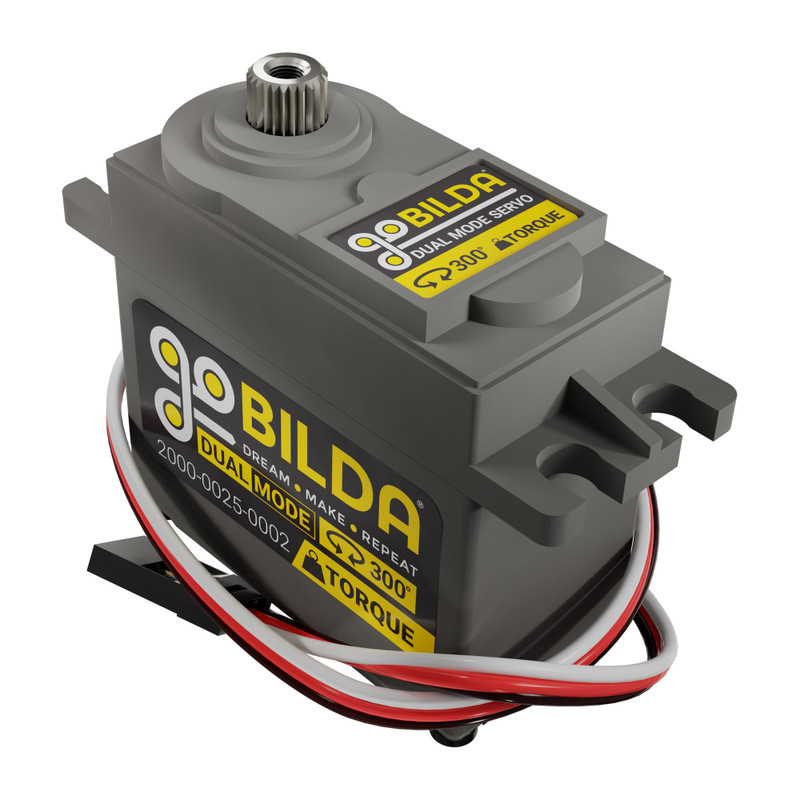
一款常见的伺服电机:goBILDA 双模式伺服电机
备注
从历史上看,伺服电机原本是为在低负载应用中实现精细、精准的运动而设计的,而非用于高负载或高速旋转的应用。 然而,现代高性能伺服电机(通常专门针对FTC团队设计和销售)已经突破了伺服电机功率的极限,因此许多团队开始使用一个或多个大功率伺服电机来驱动那些并不需要全功率电机驱动的机构,例如水平伸缩机构和主动拾取装置。
不同制造商生产的舵机种类繁多,价格、性能和价值也大相径庭。幸运的是,几乎所有的舵机都使用标准的三线连接器,并接受同一种控制信号(50 赫兹的 PWM 信号)。每个 REV 扩展集线器提供 6 个舵机端口,因此你可以插入任何制造商生产的舵机。此外,FTC 使用的舵机有一个标准尺寸,因此不同制造商生产的支架可以互换。
Commonly used servos in FTC are the goBILDA Dual Mode Servos and REV Smart Robot Servo, but you should check out other servos as well. Picking the right servo for your application is a question that’s almost impossible to give a blanket answer for. To learn more, please read the 挑选舵机 section.
伺服电机最常见的问题是耐用性。 廉价舵机的内部齿轮在受到冲击载荷时很容易滑齿。此外,这类舵机往往难以承受侧向载荷或轴的弯曲。为避免频繁更换舵机,请选择配备钢制齿轮的型号,并使用 ServoBlocks 或套件中的等效部件来延长其使用寿命。